Choosing Physical Therapy Equipment is a clinical and financial decision, not a simple shopping task. The World Health Organization estimates that 2.4 billion people worldwide may benefit from rehabilitation services. That demand makes equipment quality increasingly important. A treadmill, treatment table, or electrical stimulation unit affects safety, workflow, and patient confidence. Small details matter.
This guide, “10 Tips for Buying Physical Therapy Equipment,” connects purchasing choices with daily clinical practice. The U.S. Bureau of Labor Statistics projects 15% employment growth for physical therapists from 2022 to 2032. Clinics may therefore face rising workloads and more varied patient needs. Equipment should support measurable outcomes, flexible treatment, and efficient cleaning between sessions. It should also fit the room, staff skills, and maintenance budget. A technically advanced device can still become an expensive coat rack.
Reliable decisions require more than reading product brochures. Buyers should examine manufacturer instructions, warranty terms, service availability, user training, and applicable safety requirements. The WHO Rehabilitation 2030 initiative emphasizes stronger, accessible rehabilitation systems, but access alone does not guarantee effective care. Clinical judgment remains essential. A device may look impressive under showroom lighting, yet feel unstable during a busy afternoon. I have not found one universal checklist that fits every clinic. That limitation deserves attention. The best purchase usually combines therapist experience, patient feedback, verified performance data, and realistic total cost. This approach supports responsible investment and protects the quality of care.
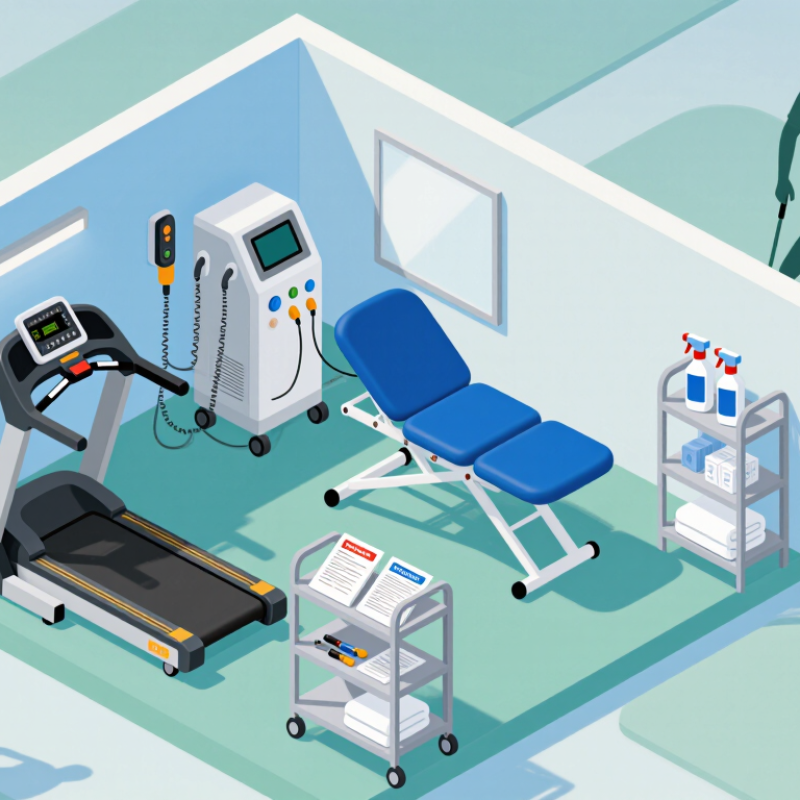
Understanding Your Physical Therapy Equipment Needs
Buying physical therapy equipment starts with understanding who will use it and what they need to practice. A clinic treating balance problems may need stable parallel bars, clear floor space, and adjustable steps. A home user recovering from knee surgery may need a firm exercise band and a chair with reliable armrests. The right choice depends on treatment goals, available space, and the user’s strength and mobility.
Think about fit and adjustability. A plinth should suit the therapist’s working height and allow safe transfers. Resistance bands should offer manageable tension, not just a wide range of colors. Check weight limits, grip comfort, cleaning requirements, and how easily equipment can be moved or stored. Small details matter. Measure doorways and storage areas before ordering; equipment that cannot reach the treatment room is not useful. I learned that lesson the hard way.
Ask a licensed physical therapist which movements the equipment should support, and whether supervision is needed. Consider how often it will be used, who will maintain it, and whether replacement parts are available. Avoid buying a complex device because it looks versatile. A simple tool used consistently may serve a patient better, though preferences and progress can change. Reassess needs as function improves, and stop using equipment that feels unstable, causes pain, or no longer fits the treatment plan.
Use this practical checklist to match equipment choices with patient needs, clinical goals, safety requirements, available space, and long-term operating costs.
| Tip | Equipment Need to Assess | Key Questions Before Buying | Recommended Specifications or Features | Priority | Practical Evaluation Method |
|---|---|---|---|---|---|
| 1 | Define the patient population | Will the equipment be used mainly for orthopedic, neurological, sports, geriatric, pediatric, or post-surgical care? | Choose adjustable equipment with suitable weight limits, height ranges, support options, and positioning flexibility. | Essential | Review the previous year’s patient mix and identify the five most common treatment conditions. |
| 2 | Match equipment to treatment goals | Does the equipment support strength, balance, mobility, range of motion, pain management, or functional training? | Prioritize equipment that directly supports documented treatment plans and measurable rehabilitation outcomes. | Essential | Map each proposed item to specific interventions, such as gait training, progressive resistance, or joint mobility. |
| 3 | Check clinical adjustability | Can therapists quickly adapt the equipment to different body sizes, ability levels, and stages of recovery? | Look for tool-free adjustments, clear measurement markings, secure locking mechanisms, and multiple resistance or support levels. | High | Have several clinicians perform setup and adjustment using different patient scenarios. |
| 4 | Evaluate safety and stability | Does the equipment minimize fall, pinch, slip, tipping, and overload risks? | Seek non-slip contact surfaces, stable frames, rounded edges, visible load limits, emergency-release features where applicable, and secure fasteners. | Essential | Inspect the equipment under normal and maximum intended loads and document potential hazards. |
| 5 | Measure available space | Will the equipment fit safely while leaving adequate room for therapist access and patient movement? | Account for the product footprint, operating clearance, storage area, doorway width, and accessibility routes. | High | Measure the room and mark the equipment footprint on the floor before placing an order. |
| 6 | Consider accessibility and patient comfort | Can patients with limited mobility, weakness, pain, or balance problems use the equipment safely? | Consider low entry height, supportive handholds, padded contact areas, transfer assistance, and easy-to-read controls. | High | Test transfers and positioning with staff members using common mobility limitations as a reference. |
| 7 | Review durability and cleaning needs | Can the equipment withstand frequent use and routine disinfection without premature wear? | Choose durable frames, sealed or washable surfaces, corrosion-resistant components, replaceable wear parts, and cleaning instructions compatible with healthcare use. | High | Ask for maintenance schedules, cleaning compatibility, expected service intervals, and replacement-part availability. |
| 8 | Calculate total cost of ownership | What will the equipment cost over its useful life, beyond the initial purchase price? | Include delivery, installation, training, accessories, inspection, repairs, consumables, energy use, and eventual disposal. | High | Compare the estimated three- to five-year ownership cost rather than comparing purchase prices alone. |
| 9 | Assess training and workflow integration | Can the clinical team use the equipment consistently without slowing patient flow? | Look for clear operating instructions, simple controls, staff training resources, and compatibility with existing assessment and treatment procedures. | Medium | Run a short workflow trial and record setup time, user errors, cleaning time, and storage requirements. |
| 10 | Verify compliance and support | Are safety documentation, user instructions, warranty terms, servicing, and technical support clearly available? | Request applicable compliance documentation, inspection guidance, warranty coverage, service contacts, and defined response times. | Essential | Keep a procurement file containing manuals, maintenance records, staff training logs, and inspection dates. |
Match it to the user’s goals, strength, mobility, and available space. A balance clinic may need parallel bars and clear floor space.
Measure doorways, treatment areas, and storage spaces. Measure first. Equipment that cannot reach the room will not help.
Check working height, grip comfort, weight limits, and adjustment options. For transfers, make sure the treatment plinth suits both the therapist and patient.
Look at frame welds, cable routing, pinch points, and locking adjustment knobs. A polished finish proves little.
Yes. Ask therapists to adjust it and try realistic movements. Test controls, stability, and access on the actual clinic floor.
Choose manageable tension for the intended exercises. Do not rely on color ranges alone; check documented performance and user comfort.
Ask about cleaning guidance, inspection intervals, load limits, and replacement parts. Staff notes can reveal recurring faults or discomfort.
Stop if it feels unstable, causes pain, or no longer suits the treatment plan. Reassess as the person’s abilities change. I might still miss a detail.
Buying Physical Therapy Equipment requires careful planning to ensure every item supports patient care, clinical goals, and long-term value. Start by identifying the treatments, patient needs, and daily workload the equipment must handle. Evaluate quality, safety features, ease of use, adjustability, and clinical performance rather than choosing based on price alone. Reliable construction and user-friendly design can improve treatment consistency while reducing avoidable risks.
It is also important to compare features, total costs, warranties, training, delivery, and supplier support. Before purchasing, confirm that the equipment fits the available space, works with existing systems, and can be cleaned, serviced, and maintained efficiently. A well-informed decision should consider both immediate benefits and future operating expenses. After installation, regularly review equipment condition, staff feedback, patient outcomes, and changing therapy demands. This ongoing evaluation helps ensure that each purchase continues to provide safe, effective, and practical support for a successful physical therapy environment.

 Royalpeak